We earn a commission if you buy through our links, at no extra cost to you.
Best Carry-On Luggage for Business Travel
Garment care, laptop access, warranty terms and weekly-flyer durability: how to choose a business carry-on, plus three bags from our lineup that suit road warriors.
At a glance
For business trips, choose by what you carry. The Briggs & Riley Baseline Essential 22 has cinch-down garment panels and a lifetime guarantee, the Travelpro Platinum Elite 21 adds a drop-in fold-out suiter and USB ports, and the Victorinox Spectra 3.0 Frequent Flyer has a front compartment for a laptop up to 15 inches.
Most carry-on advice is written for vacations. A business trip is a different job. Your bag goes through the same airports every week, it has to keep a jacket and two shirts presentable, your laptop needs to come out at security without a full unpack, and at some point an airline will probably damage a handle or a wheel. This guide covers what matters for that kind of travel, then shows the three models on our site that fit it best.
We do not run our own luggage trials. Everything below comes from the specs and warranty terms the makers publish on their official pages, and from airline pages we opened. Where a warranty is something we could not verify, we say so.
Garment Care: Suiter, Panels or Hanging Bag
Wrinkles come from folds that slide against each other, so the goal is to keep garments from shifting and to limit sharp creases. Two approaches work in a carry-on.
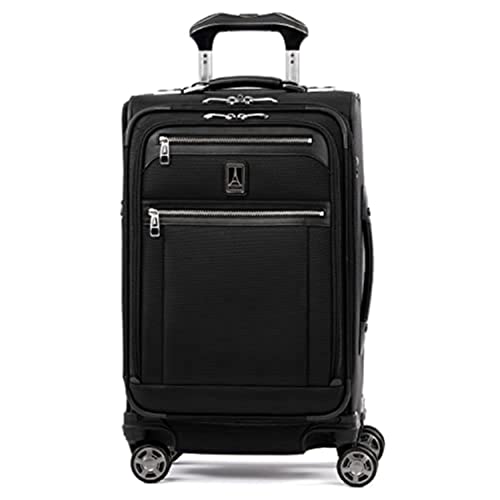
A suiter is a sleeve or folder that holds a jacket, shirts and trousers in one piece and folds once. Travelpro describes the drop-in fold-out suiter in the Platinum Elite 21 as doing exactly that, and says it doubles as a removable garment bag, so you can lift it out and hang it at the hotel.
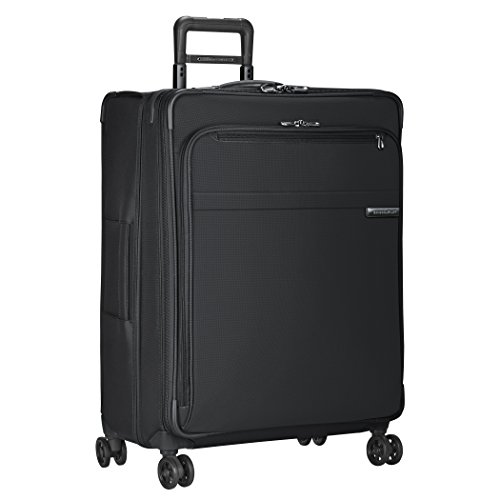
Cinch-down panels are straps and covers that press the packed clothes flat so the load cannot slide. Briggs & Riley lists premium cinch-down garment panels on the Baseline Essential 22 and says they hold clothes in place and keep wrinkles to a minimum. The company also mounts the handle on the outside of the bag, which it calls the Outsider handle. Briggs & Riley says this creates a flat, ridgeless interior that simplifies packing.
Whichever you use, a few habits help: pack the jacket last so it sits on top, and put shoes and heavy items at the wheel end of the bag so they do not press on your clothes.
Laptop and Front Access
At a security checkpoint you will often be asked to take your laptop out of its bag. If it lives in the main compartment of a roller, that can mean laying the case flat and opening the shell in the screening line. A front compartment avoids that. Victorinox lists a lockable, quick-access front compartment on the Spectra 3.0 Frequent Flyer with an organization panel and a laptop size of up to 15 inches. The alternative is a laptop bag as your personal item. Delta’s page says each passenger may bring one carry-on bag and one personal item, and lists a laptop bag, briefcase or small backpack as approved personal items. That lets you use the roller only for clothes.
For charging, the bags here differ. Travelpro’s Platinum Elite 21 has external USB-A and USB-C ports connected to a pocket for your own power bank, which Travelpro says meets FAA regulations. The FAA’s PackSafe page says power banks, spare batteries and lithium batteries under 160 Wh must remain with passengers in the aircraft cabin. A power bank in a bag that gets gate-checked is a problem, so take it out before you hand the bag over.
Size, Weight and the Gate-Check Risk
The business traveler’s nightmare is a gate-check: your suit goes in the hold and you land without it. Delta lists a 22 x 14 x 9 inch limit including handles and wheels and says a flight attendant or gate agent can check bags when a flight is short on bin space. It also says flight attendants cannot proactively help customers place bags in overhead bins, with certain exceptions. That is another reason to care about weight: you will lift the bag yourself.
A 10-lb bag means a heavy lift before you pack anything. Briggs & Riley lists the Baseline Essential 22 at 10 lbs, Travelpro lists the Platinum Elite 21 at 7.8 lbs and Victorinox lists the Spectra 3.0 Frequent Flyer at 3.3 kg (about 7.3 lb). Travelpro also advises that regional jets have smaller bins, so a gate-check there is likely with any brand. If you fly a lot of regional routes, pick the smallest bag you can, keep the suit in a separate garment bag and carry your laptop and documents in your personal item.
Warranty and Repairs for Weekly Flyers
A bag used every week will need repair, and the terms differ more than the specs do.
- Briggs & Riley describes a lifetime guarantee that it says covers damage even by an airline, with no proof of purchase needed.
- Travelpro describes a Built for a Lifetime Limited Warranty covering defects in materials and workmanship, including wheels, zippers and handles. Its Trusted Companion Promise says that if you register the bag within 120 days of delivery, Travelpro adds coverage for shipping and for damage caused by an airline or other common carrier. So register the bag the day it arrives.
- Victorinox’s international page lists a 1+10-year warranty. We could not open the US page, so confirm what that means for a purchase in the US before you rely on it.
Whatever the brand, confirm that your seller is authorized and keep your receipt. A warranty is only as good as the repair process behind it, and we cannot evaluate how fast or convenient any of them are.
Briggs & Riley Baseline Essential 22
For the traveler who flies weekly and wants garment panels, a flat packing surface and a guarantee that covers airline damage. It is the heaviest bag on our site at 10 lbs.
According to Briggs & Riley, the Baseline Essential 22 is a softside bag in ballistic nylon with self-repairing YKK zippers, impact-resistant corner guards and four spinner wheels. Its CX Smart Packing system expands for more room and compresses back to carry-on size, listed at 22 x 14 x 9 inches compressed and 37 to 48 L. The company calls it “the ultimate domestic carry-on.”
For a business traveler, the points are the garment panels, the exterior handle and the guarantee. The trade-offs are the weight and the fact that the bag sits exactly on the 22 x 14 x 9 inch line that Delta publishes (American and United list the same, according to Travelpro), so there is no margin for a strict sizer. When expanded to 11.5 inches deep it must be checked. Read the details in our Briggs & Riley Baseline Essential 22 profile.
Travelpro Platinum Elite 21
Built for suits: a drop-in fold-out suiter that doubles as a removable garment bag, plus external USB ports wired to a power-bank pocket and eight spinner wheels.
Travelpro lists the Platinum Elite 21 at 7.8 lbs and 46 L, with a tapered expansion that adds up to 2 inches, eight MagnaTrac spinner wheels, a PowerScope handle and a removable quart-size wet pocket for toiletries. The warranty is the Built for a Lifetime Limited Warranty, with the Trusted Companion Promise for registered bags.
The size is the part to read twice. The case is 21 x 14 x 9 inches, but Travelpro lists the overall size, wheels and handles included, as 23.5 x 14.5 x 9 inches, which is taller than the 22-inch limit that Delta publishes (American and United list the same, according to Travelpro). Travelpro says the bag is sizer-bin tested to fit the overhead bins of most major US airlines. That is the maker’s claim; on a strict gate, assume there is a chance of a gate-check, and keep the bag unexpanded. Our Travelpro Platinum Elite 21 profile has the full numbers.
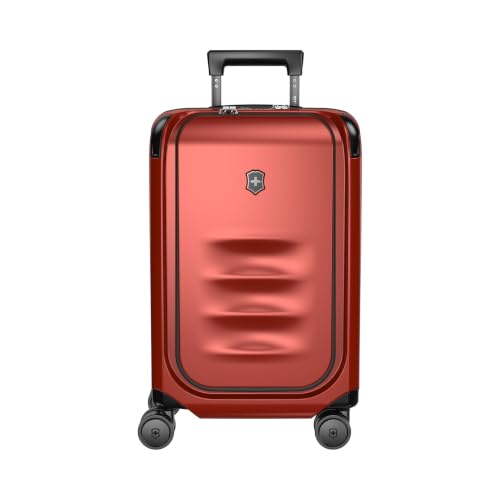
Victorinox Spectra 3.0 Frequent Flyer
A hardside with a lockable front compartment for a laptop up to 15 inches, listed at 3.3 kg, for short trips where quick access matters more than capacity.
Victorinox lists the Spectra 3.0 Frequent Flyer as an 8-wheel expandable cabin case with a SORPLAS recycled polycarbonate shell, a 37 L capacity (44 L expanded) and a front compartment with an organization panel. The listed size is 55 x 35 x 23 cm (about 21.7 x 13.8 x 9.1 inches), and the page does not say whether wheels and handle are included.
It suits a one- to three-night trip with a laptop. It is a weaker fit for a suit, because the page lists no garment panels or suiter, and 37 L is small. The US warranty terms need checking before you buy. See the Victorinox Spectra 3.0 Frequent Flyer profile for that.
Which One for Which Business Traveler
- You fly every week and want a long-term bag: the Briggs & Riley, accepting the weight.
- You carry a suit and want charging: the Travelpro, accepting the size risk, and register it.
- You travel light with a laptop and a change of shirt: the Victorinox, after confirming the US warranty.
If none of these fits, our full carry-on luggage comparison ranks all eight bags on our site, including lighter and smaller options.
Sources
- Briggs & Riley Baseline Essential 22” Carry-On Expandable Spinner official product page
- Travelpro Platinum Elite Carry-On Spinner official product page
- Victorinox Spectra 3.0 Frequent Flyer Carry-On official product page (international)
- Delta Air Lines carry-on baggage page
- FAA PackSafe for passengers
Frequently asked questions
What is the best way to carry a suit in a carry-on?
There are two approaches. A suiter or garment panel holds the jacket flat or folded once so it creases less, and a garment bag hangs it. Travelpro says the drop-in fold-out suiter in the Platinum Elite 21 doubles as a removable garment bag, and Briggs & Riley lists cinch-down garment panels that hold clothes in place and keep wrinkles to a minimum. Either way, pack the jacket last so it sits on top.
Do I need a carry-on with a front laptop compartment?
Not required, but it saves time. Without one, you open the main shell to reach a laptop at security or at a gate. Victorinox lists a lockable front compartment on the Spectra 3.0 Frequent Flyer with room for a laptop up to 15 inches. It does not describe padding for this model, so many travelers still add a padded sleeve.
How do warranties compare for frequent flyers?
They are not the same. Briggs & Riley describes a lifetime guarantee that it says covers damage even by an airline, with no proof of purchase needed. Travelpro's Built for a Lifetime Limited Warranty covers defects, and its Trusted Companion Promise adds airline-damage repair if you register within 120 days. Victorinox's international page lists a 1+10-year warranty, and you should confirm the terms that apply to a US purchase.
Can I charge my phone from a carry-on with a USB port?
On bags with a built-in port, the port is wired to a pocket where you place your own power bank. Travelpro says the Platinum Elite 21's pocket meets FAA regulations. The FAA's PackSafe page says power banks and spare lithium batteries under 160 Wh must stay with you in the cabin, so never put the power bank in a checked bag.
Is a hardside or softside carry-on better for work trips?
Softside bags such as the Briggs & Riley and Travelpro are fabric, with some give, and the Briggs & Riley lists a large front pocket. A hardside such as the Victorinox has a rigid polycarbonate shell, so its size limit is firmer. Which is better depends on whether you want exterior pockets or a rigid shell.
How many weekly trips can a carry-on handle?
None of these three makers publishes a trip count. What they publish is construction and coverage: ballistic nylon and self-repairing zippers from Briggs & Riley, a lifetime limited warranty from Travelpro, and a 1+10-year warranty from Victorinox. For a bag you will use every week, the repair path matters at least as much as the material.